





2025.11.14
Industry Trends
A Complete Guide to Welding Robots: Types, Benefits, and Limitations
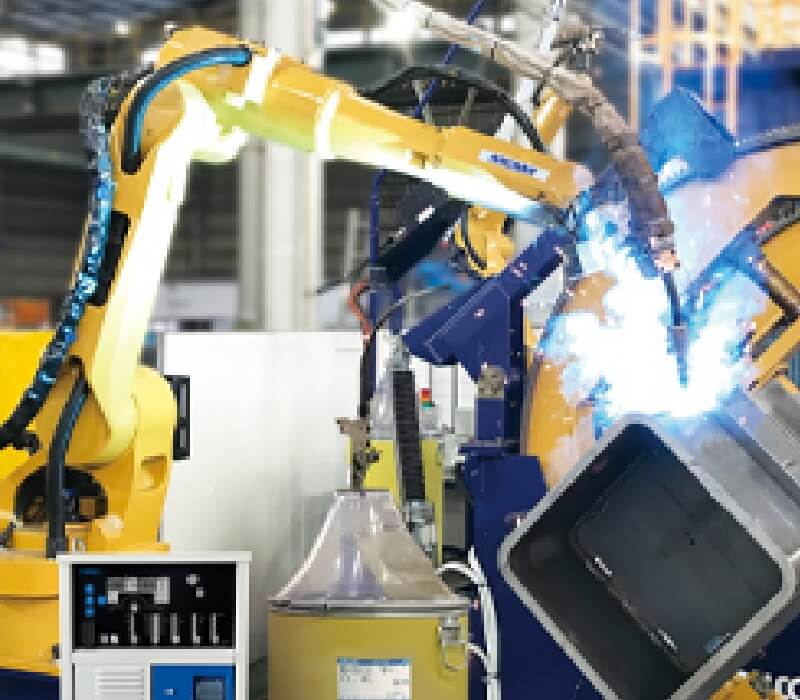
In today’s world, factories worldwide are rapidly adopting welding robots to replace tasks once performed by hand, transforming manufacturing lines with speed, precision, and safety. Unlike humans, a welding robot can operate for prolonged periods without breaks. By repeating the same welds consistently, businesses save time, lower overall costs, and ensure high-quality products.
Major construction-related industries — including automotive manufacturing, aerospace, construction machinery, structural steel, and medical device production — are increasingly turning to welding automation.
In this guide, we will highlight:
- ・What welding robots are and how they work
- ・Different types of welding robots used in factories
- ・The main benefits and limitations of using these machines
- ・Where welding robots are used the most What the future of welding automation looks like with cobots and AI
By the end, you will have a clear idea of whether a robotic welding system is the right choice for your business.
What Are Welding Robots?
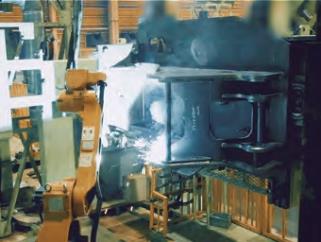
A welding robot is a type of industrial robot designed to join pieces of metal using heat. Instead of a human holding the welding torch, the robot arm does the job. These robots are programmed to follow a set path, repeat the same movements, and produce welds with great accuracy.
The idea behind robotic welding is simple: take a task that is often difficult, dangerous, and exhausting — and sometimes impractical — for humans, and let a machine do it. Welding involves exposure to extreme heat, intense arc light, spatter, and toxic fumes that pose serious health risks. A welding robot, by contrast, handles these risks while prioritizing worker safety.
Key Parts of a Welding Robot
- ・Robot Arm – Moves like a human arm but with much more precision.
- ・Welding Torch – Performs the weld at the end of the arm.
- ・Controller – The “brain” that tells the robot what to do.
- ・Sensors – Adjust the weld in real time for improved quality.
Working together, these components enable a welding automation system to weld hundreds or even thousands of parts daily without compromising quality.
Why Welding Robots Are Popular and Highly Preferable
- ・Save time and energy by working faster than humans.
- ・Provide consistent weld quality every single time.
- ・Reduce errors and waste, lowering costs.
- ・Make factories safer by keeping workers away from arc light, fumes, and other hazardous emissions.
- ・Decrease welding spatter, improve finish quality, and cut down on post-processing.
- ・Allow higher current levels than manual welding while maintaining stable quality — boosting productivity in heavy-duty applications.
In short, industrial welding robots are vital for companies seeking high productivity, lower costs, strong quality control, and safer working conditions.
Types of Welding Robots and Their Applications
Not all welding automation systems work the same. Different industries and projects require different types of welding robots. Each has its strengths, and knowing these helps you choose the right one.
Below are the most common types of robotic welding solutions and where they are commonly used.
Gas Metal Arc Welding Robots (GMAW / MIG Robots)
Gas Metal Arc Welding — often called MIG welding — uses a continuously fed wire electrode and a shielding gas to join metals. It is one of the most common robotic welding processes.
Where they’re used:
- ・Automotive – car frames, exhaust systems, body panels
- ・Heavy equipment – tractors, construction machines, railcars
- ・Metal fabrication – high-volume welding of steel and aluminum parts
Why companies use them:
- ・Fast welding speed for mass production
- ・Works well on many metals
- ・Reduces human error and ensures consistent quality
Collaborative Welding Robots (Cobots)
Collaborative robots are robotic arms designed to work safely next to human operators without a safety cage. They are smaller, easier to set up, and flexible.
Where they’re used:
- ・SMBs with limited space
- ・Workshops where humans and robots share tasks
- ・Custom fabrication jobs that require flexibility
Why companies use them:
- ・User-friendly programming (hand-guiding)
- ・Smaller footprint than large industrial robots
- ・Improved worker safety for hazardous tasks
- ・Cost-effective for small-batch or flexible production
Gas Tungsten Arc Welding Robots (GTAW / TIG Robots)
TIG welding (Tungsten Inert Gas) uses a non-consumable tungsten electrode to create precise, high-quality welds. It’s slower than MIG but offers greater control.
Where they’re used:
- ・Aerospace – thin metals like titanium and aluminum alloys
- ・Medical equipment – surgical tools, implants, precision parts
- ・Food & beverage equipment – where clean, smooth welds matter
Why companies use them:
- ・Very clean and strong welds
- ・Ideal for thin or delicate metals
- ・Lower defect rates
Laser Welding Robots
Laser welding uses a high-powered laser beam to melt and join metals. It’s extremely fast and precise — ideal for high-volume, low-defect production.
Where they’re used:
- ・Electronics – delicate parts like batteries and sensors
- ・Automotive – precise welds on frames and components
- ・Aerospace & defense – where accuracy and strength are critical
Why companies use them:
- ・Very high accuracy and precision
- ・Can weld hard-to-reach areas
- ・Smooth, clean, strong welds
- ・Excellent for high-speed production lines
Advantages of Welding Robots
Increased Productivity and Efficiency
A robot welder can work 24/7 without breaks or fatigue. Robots can also operate at higher current (amperage) levels than human welders, significantly increasing deposition rates and throughput — delivering faster welding cycles while maintaining quality.
Consistent Weld Quality
Robotic systems ensure stable, repeatable quality for every product. They minimize human error and excel in aerospace, medical manufacturing, construction steel frames, and heavy machinery — where precision is critical.
Reduced Material Waste and Spatter
Automation minimizes spatter and other defects, reducing cleanup and material waste while lowering production costs. Over time, this efficiency translates into significant productivity gains.
Reduced Labor Risk and Improved Safety
Welding exposes workers to heat, arc light, smoke, and hazardous fumes. Robots reduce the need for humans to perform risky tasks, improving safety and cutting accident risk. Labor costs can also fall as one welding cell often replaces multiple manual operations, allowing skilled workers to focus on higher-value tasks like programming, supervision, and quality control.
Despite these advantages, businesses must also weigh some challenges before investing in welding automation.
Limitations of Welding Robots
High Initial Investment
A welding robot system includes the arm, controller, welding equipment, sensors, and software — plus installation, training, and maintenance. For SMBs, the upfront cost can be challenging, even though long-term savings are common.
Programming Complexity
Robots require programming and teaching. Setups can be complex for intricate parts or frequent design changes, often requiring skilled technicians. While modern cobots and AI-assisted tools are simplifying this, it remains a consideration.
What Are Welding Robots Used For?
Welding robots are used wherever strong, reliable, repeatable welds are needed — supporting both mass production and high-quality manufacturing.
Automotive Industry
The largest user of robotic welding systems. Robots weld frames, exhaust systems, fuel tanks, and body panels — producing thousands of vehicles daily with consistent quality. Laser welding is often used where high strength and precision are required, improving safety and reducing costs.
Aerospace and Medical Manufacturing
Aerospace: Aircraft parts, turbines, and thin aluminum or titanium alloys. TIG robots deliver precise, clean welds that withstand high stress and extreme conditions.
Medical: Surgical instruments, implants, and devices demand defect-free, hygienic welds. Laser welding delivers precise, clean, strong joints that meet strict standards.
The Future of Welding Robots
New technologies are making robots smarter, safer, and easier to use. Beyond traditional industrial robots, the next wave combines collaborative robots (cobots) with AI and machine learning.
Collaborative Robots (Cobots) – Industry Opinions
Some experts note welding’s inherent hazards limit true “collaboration.” Still, compact cobot welders are growing in small workshops and custom jobs. Cobots won’t replace traditional cells entirely but will expand flexible, small-scale automation.
Advancements in AI and Machine Learning
AI-powered welding systems can adjust patterns in real time using sensor data — detecting gaps, misalignment, or material issues and correcting automatically. Machine learning improves results over time, reducing programming burden and errors and making automation more accessible.
Why Choose KOBELCO for Welding Robots?
KOBELCO is a proven leader in Southeast Asia and Japan with strong expertise in medium- and thick-plate welding. We provide advanced solutions for structural steel frames, construction machinery, and railroad cars.
Unlike providers who sell only hardware, KOBELCO delivers integrated welding solutions — combining robots and equipment with welding consumables and process expertise. This total approach drives higher productivity, lower costs, and superior weld quality.
Our Advanced Technologies
- ・Tandem Welding – High-efficiency welding for thick plates and heavy-duty applications
- ・Sensor Functions – Accurate multi-pass and thick-plate support
- ・Off-line Teaching Systems – Faster, easier programming and setup
- ・Reliable Robots and Machines – Built for durability, precision, and stable long-term operation
By combining hardware, software, and consumables, KOBELCO ensures seamless integration across the entire welding process.
Conclusion: Is a Welding Robot Right for Your Business?
Welding robots have become essential across industries — from automotive and aerospace to structural steel and medical equipment. They deliver faster production cycles, reduce spatter and rework, ensure consistent quality, and create safer workplaces.
For organizations seeking productivity, safety, and reliable quality, welding robots are no longer optional. And with KOBELCO’s total welding solutions — spanning robots, consumables, and decades of welding expertise — you gain more than equipment: you gain a trusted partner to drive efficiency, lower costs, and secure long-term manufacturing competitiveness.
Frequently Asked Questions (FAQ)
Which type of robot welding uses electrical heat flowing from an electrode to a workpiece?
That would be Gas Metal Arc Welding (GMAW/MIG). In this method, an electric current passes through a wire electrode, melting it into the base metal. It is widely used in the automotive and heavy equipment industries because it is fast, efficient, and delivers consistent robotic welding results across different types of metals.
How much does a welding robot cost?
A welding robot typically ranges from $10,000 to $250,000+, depending on its size, technology, and features. The cost of a robotic welding system may also vary by industry application and automation level. While the upfront investment is significant, most businesses recover the cost within a few years thanks to faster production, fewer errors, reduced waste, and safer operations.
Why should I use a robot for welding?
- ・Speed – Robots weld faster than humans and can work 24/7.
- ・Consistency – Every weld meets the same high-quality standard.
- ・Safety – Robots protect workers from arc light, fumes, and high heat.
- ・Cost savings – Less rework, reduced spatter, and lower long-term labor costs.
For manufacturers aiming for higher productivity and reliable weld quality, welding robots are a smart, future-ready investment.